Back to School Sale!

Have you heard? There is going to be a wonderful Back to School Sale on Teachers Pay Teachers August 1st - 4th! I am offering a 20% discount off of every single item in my store, and you can use the code B1T1S to save an additional 10% for a total of 30% off! What a great opportunity to cross items off of your wishlist! Click here to visit my store, and happy shopping!

If you'd prefer to earn points by shopping at my Teacher's Notebook store, you will find my items on sale there as well! Just click here to visit my store!

Here are some of the items you'll find on sale:

Mystery Readers Kit - A great (and easy) way to get parents and family members involved in your classroom!

 Daily Five Pocket Chart Set - A simple way to manage your daily five workstations!

Thinking Maps for Writing: Circle Maps and Tree Maps for the School Year

The CAFE Pensieve - Everything you need to set up your Reading Conference Notebook!

Classroom Management - Freebies

*Updated February 2016* If you would like to read my new Three Part Series on Classroom Management for updated tips and FREEBIES, please click the photo below. Otherwise, scroll on down for this original post. Thanks for stopping by and Happy Teaching!


The Lesson Plan Diva is hosting a Behavior Plans and Classroom Management Linky Party...Click HERE to check it out!

I've only been teaching for four years, but in this short period of time, my classroom management style has changed drastically.  My first year, I used a card pulling system, and my second year I used some counting techniques in addition to that.  Half way through my second year, I stumbled upon some information about responsive classroom techniques and positive discipline on Proteacher.  After trying out some new ideas, I have finally found my management style, and I love it!

Nowadays, my classroom management is centered around daily classroom meetings and problem-solving.  My students learn to monitor and change their own behavior through role-playing, responding to literature, and lots of student-centered conversation about the way we want our classroom to be.  We no longer use cards, clips, rewards, or punishments, and the result has been much less stress for me:).

At the beginning of the year, my students and I first talk about our hopes and dreams for the school year.  We talk about the kind of classroom we want to have, and then we discuss a plan for creating that environment.  We make our class rules through a series of discussions and brainstorming sessions.  First, I have my students list all of the rules they think we might want to have in our room.  Then, we go back and categorize the rules.  Most of our rules fit under the same broad categories, so my rules are pretty similar from year to year.  After giving each category of rules a title, we phrase the rules into "Our Class Promise," which is hung as an anchor chart and signed by everyone in the class (including me).  The picture above is of our class promise from a few years ago--I wasn't as specific with it then.

Every day during our class meeting time, we read our rules together (this year, I'm hoping to add actions to the rules so they will be more easily remembered by my kinesthetic learners).  Here is an example of my classroom's promise: We promise...to be safe and careful, to be kind and respectful in our words and actions, to do our best first grade work, and to make ourselves proud by doing the right thing!  Notice how that last rule encompasses lots of possibilities:)

When we have problems in the classroom, I try to address them as respectfully as possible, and this can occur in a number of ways.  Sometimes, I'll simply ask the child to remember our promise, and this will provide immediate correction.  Sometimes, I'll ask a child to cool-down for a minute to reflect on his or her actions.  This cool-down is not a punishment, but just a time to rethink, and the students are welcome to rejoin the class when they feel ready.  Students sometimes go to cool-down without my asking--this works well for those who need a quiet time to reflect or avoid frustration.  In solving behavior problems, I'll also sometimes ask a student if he or she wants the class to help him or her solve the problem, and we'll address it as a class during our daily meeting.  The students practice "helping, not hurting," so this is the focus, rather than making the child feel bad.  I also use logical consequences such as going back and walking when a student does something like running in the hall.

During class meetings, we usually read our promise, share compliments and appreciations, solve any problems the kiddos are having, and do a team-building exercise.  We might also read a story focusing on character education, or have a mini-lesson.  The students learn things such as how to tell the difference between tattling and reporting, how to make I-statements, how to help friends solve problems, and how to use "The Wheel of Choice" to solve a problem.
If a student has severe issues that cannot be solved during class meetings, I create a modified behavior plan for that child.  This is a plan that involves the teacher, the student, and his or her parents.  It takes some effort to stick with it, but I have found it really effective in helping students make positive changes. 

Here is what you do...talk to the parents and child about three small goals that you would like him or her to focus on.  Also discuss a logical consequence that will occur if the child does not exhibit the particular behavior.  Furthermore, discuss three rewards the child might like to earn if he or she reaches the goal.  Record these items on the behavior chart.  During class, monitor the child's behavior in regards to the goals and give him or her a smiley/sad face for every 30 minutes during the school day (I set a timer on the child's desk).  In the first two weeks of using the plan, I ask the child to try for 50% achievement. If he or she is consistent in getting 50% smilies, we increase the goal to 75% for a few weeks, and then 95% for another couple of weeks.  Each day the child reaches his or her goal, allow him or her to choose one of his or her rewards.  I like to use free activities as rewards such as lunch with a friend, computer time, or extra centers time.  The behavior plan is sent home each day and returned with a parent signature and comments as necessary.

Because this plan involves teacher effort in monitoring and recording the student behavior, I usually only use this plan with one or two children at a time for about a 2 month period, as needed.  I try to remember that the goal is improvement and not perfection, and that it takes time for the students to learn new behaviors.

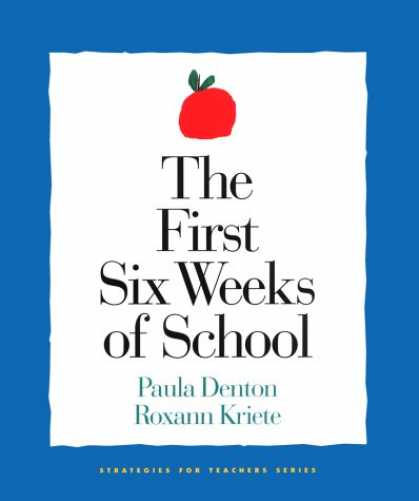
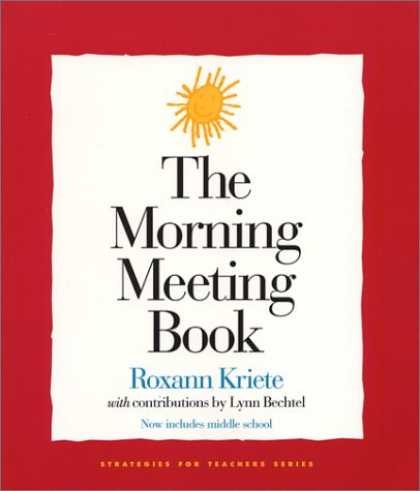
I know that was a ton of info at once, and really just a big overview, so if you want to learn more about classroom meetings, positive discipline, or responsive classroom techniques, see these wonderful resources, or feel free to ask specific questions and I'll do my best to answer!  Also, if you'd like to use any of my documents, you are welcome to click on the pictures above to download them from google docs.

Favorite Responsive Classroom and Positive Discipline Resources:

 

Writer's Notebooks and Idea Starters (Freebie)

Last year, I used binders for my students' writer's notebooks, and I liked them sooo much better than the composition notebooks and pocket folders I used in years past!  Here are some reasons why...First, binders are easy for the students to personalize since they can easily decorate papers to insert into the front and back covers of their binder. Binders are also great because they keep papers more permanently than folders, so they can show growth over the entire school year.  In addition, they can hold many types of paper including lined and unlined papers for writing in different genres as well as stapled books in the inside pockets. 

One thing I like to do is add some idea starters to my students' writer's notebooks so if my students ever have writer's block, they can easily find a topic to write about.  When I give the students their writer's notebooks at the beginning of the year, they will find some idea starters printed on colored cardstock behind the beginning of the year writing paper.  Over the first few weeks of school, we fill out the idea starters before our independent writing time starts.  These are the idea starters we use:
  • Heart Map - Write down (or sketch) all of the people, places and things you love.  Add to this map throughout the year as you might have new ideas later on.
  • Hand Map - Write down things that you like to do.
  • Foot Map - Write the names of places you have been or where you would like to go.
  • Neighborhood Map - Draw your neighborhood map.  Include your house, friend's houses, areas where you play, and places you like to go frequently.  Put stars on places that would be great writing topics.  Later, extend this by drawing a map of the different rooms of your house.
  • Family Portrait - Draw and label the members of your family. Write some words describing them or things you like to do with your family.
  • All About Me - Answer the questions with words and pictures. 
When your writers get stuck, simply help them refer to their idea starters to choose a topic that is meaningful to them!

If you would like to download my Idea Starters, click HERE. Enjoy!


Favorite Back to School Activity Linky Party - Freebie

Fun in First is having a Back to School Activity Linky Party!
I love back to school time because there are so many excellent books to read and great ideas for welcoming the boys and girls into your classroom! I like to use Kevin Henkes' Chrysanthemum to spur on lots of name activities, including this next one.  I got this idea from Shari Sloan of kidscount1234.com . If you haven't seen her site or heard her speak, you have to check her out--she's wonderful! Anyways, back to the activity...it is a class book and song called, "This Friend on the Bus."  It is sung to the tune of "The Wheels on the Bus." The students practice writing their name within the song lyrics, then they draw a picture of their face, or you can glue a photo of their face in the school bus.  Then, the class gathers in a circle and everyone introduces him or herself.  After each introduction, the class sings the song that is written on that child's book page.  It is really fun and a great way to start learning everyone's name! Plus, you can bind it into a class book that the kids will love to read and reread! Here is the book cover and student page if you'd like it!

Peanut, Peanut Butter...and Jelly! Classroom Management Ideas and Freebie

In getting ready for this school year, I found this video (see bottom of post) of wonderful classroom management in action.  It is from the Whole Brain Teaching website, which is full of great ideas.  I love so many of the things the teacher does in this video, but there are a couple ideas in particular that I can see myself using in my own classroom.  One thing I really like is how she has her students walk across the room on syllables.  This could totally prevent the racing to line-up issue that I always have (even though I use assigned spots in line and dismiss in small groups).  You could even extend this to other ideas and have students walk while skip counting or reciting phonograms. Love it!

But, my favorite idea from this clip is for Peanut Butter and Jelly Partners--what a neat way to manage partnerships! My students do a lot of partner sharing particularly during workshop time, and it would be so easy to say something like "Peanut butter goes first, Jelly shares second."  To help manage partnerships, I made a simple pocket chart set for assigning my partners.  I will just put two student's numbers together to indicate who will work together, and then put the peanut butter and jelly header cards above the columns to indicate which partner will be which.  This should make it easy to keep track of partnerships and even to change them every once in a while.  If you want to download my pocket chart set, just click on each image:).


Blog Giveaway!

Ladybug Teacher Files is celebrating 1000 followers!! Congrats!! In honor of this special achievement you (or I) could win some wonderful prizes!  Click on over to check it out!


100th Day of School Linky Party

Happy 100th Day, TBA!

The 100th day of School is one of my favorite celebrations every year! We start the day off right with a 100 Kiss Scavenger Hunt. I write the numbers 1-100 on Hershey's Kisses and "hide" them all over the room. The students find all of the kisses (in a sneaky, silent scavenger hunt that is always full of giggling and trying not to make a peep) and put them on the correct location on a class-sized 100's chart. I only allow the students to have one kiss in their hand at a time, so they must place their's on the chart before going to get another. This also prevents racing to get the kisses or fighting over kisses.

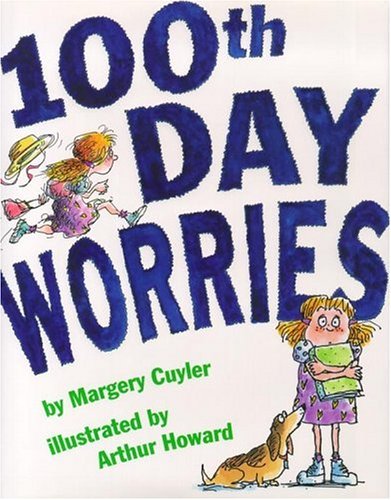
 We also read the book 100th Day Worries and share our collections of 100 items. 


Students and teachers dress like they are 100 years old, and we do self portraits of our 100 year old selves. 

Another of my favorite activities is a shared writing where we make a list of "100 Things We've Learned in 100 Days of First Grade."
 

Find Me On Instagram

Popular Posts

Search


Find Me On Pinterest